


Visa E-1 pour les entrepreneurs turcs dans le cadre d'un accord commercial : volume d'échanges, structure de propriété et conditions d'éligibilité des salariés
For a Turkish business that already trades with the United States, the E-1 Treaty Trader Visa for Turkish Business Owners can be a direct way to send owners and key staff to run that trade from the U.S. Turkey is an E-1 treaty country, and the visa turns on three pillars: substantial and continuous international trade, more than 50% of which is between the United States and Turkey; ownership of the trading enterprise by Turkish nationals; and employees who share that nationality and fill executive, supervisory, or essential roles. It is a nonimmigrant visa built for genuine, ongoing commerce. The E-1 Treaty Trader Visa for Turkish Business Owners is essential for facilitating trade opportunities.
This guide explains the trade-volume, ownership, and employee requirements for Turkish business owners, and how the E-1 Treaty Trader Visa for Turkish Business Owners differs from the E-2. It complements our E-1 treaty trader service page et notre guide sur le Visa d'investisseur E-2.
Le E-1 Treaty Trader Visa for Turkish Business Owners not only allows Turkish nationals to engage in trade but also opens up avenues for expansion and growth within the U.S. market.
Does your Turkish company’s trade with the U.S. qualify for the E-1 Treaty Trader Visa for Turkish Business Owners? Atlas Legal can review your trade volume, ownership, and staffing to help you build a strong treaty trader case. Contactez notre équipe to assess eligibility.
Le E-1 Treaty Trader Visa for Turkish Business Owners is a crucial instrument for Turkish companies aiming to solidify their presence in the U.S. and enhance their trading activities.
Principaux enseignements
- The E-1 is for nationals of a treaty country, including Turkey, engaged in substantial trade with the United States.
- More than 50% of the enterprise’s international trade must be between the U.S. and Turkey.
- Trade must be substantial and continuous, meaning numerous transactions over time, not a single deal.
- At least 50% of the business must be owned by Turkish nationals to establish the treaty nationality.
- Employees must share the treaty nationality and serve in executive, supervisory, or essential-skill roles.
Contenu de ce guide
Overview of the E-1 Treaty Trader Visa for Turkish Business Owners
This guide will provide insights into how the E-1 Treaty Trader Visa for Turkish Business Owners can benefit your Turkish business, including eligibility criteria and application processes.
- What the E-1 treaty trader visa is
- The substantial trade requirement
- The more-than-50% rule
- Ownership and treaty nationality
- Employee eligibility
- E-1 vs. E-2 for Turkish businesses
- Foire aux questions
What the E-1 Treaty Trader Visa Is
Le E-1 Treaty Trader Visa for Turkish Business Owners lets nationals of a treaty country come to the United States to carry on substantial international trade between the U.S. and their country. Turkey maintains a qualifying treaty, so Turkish nationals can use the E-1 Treaty Trader Visa for Turkish Business Owners when their enterprise conducts genuine, ongoing trade with the United States. The governing standards are found in 9 FAM 402.9, which covers E visas.
Unlike the E-2, which is about investing in a U.S. business, the E-1 Treaty Trader Visa for Turkish Business Owners is about trade, the exchange of goods, services, or other items between the two countries. It suits established Turkish trading companies, exporters and importers, and service providers with a steady flow of business across the Atlantic. Like other E visas, it is a nonimmigrant classification tied to the qualifying activity.
The Substantial Trade Requirement
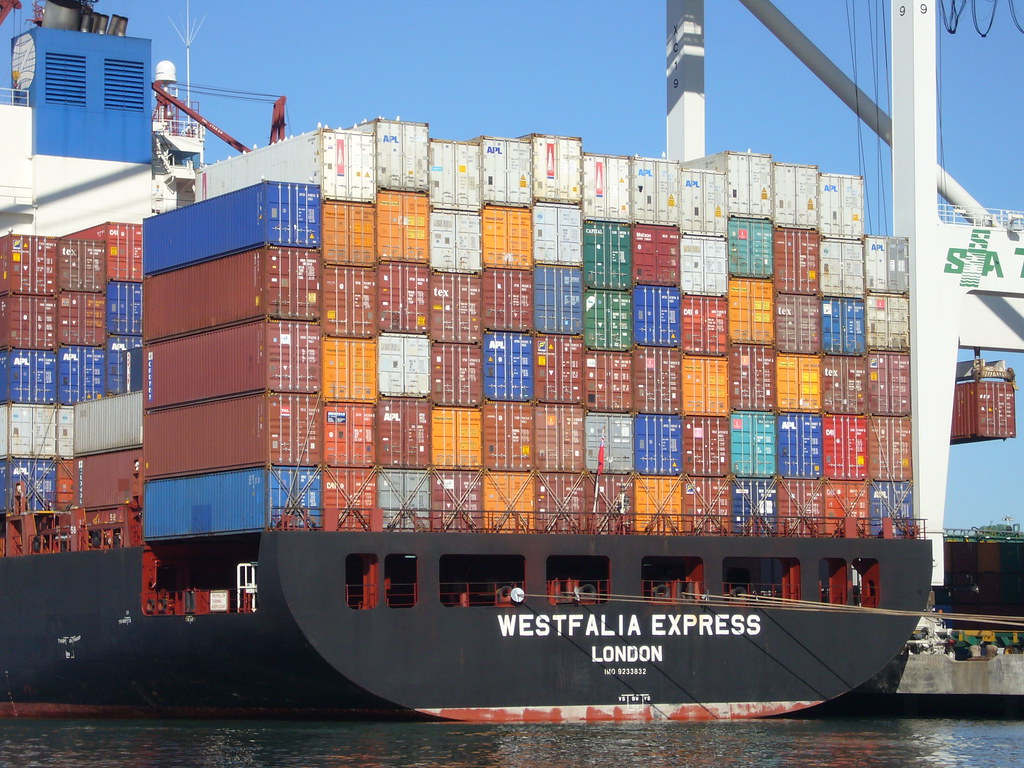
Trade must be substantial, which the standards describe as a quantum sufficient to ensure a continuous flow of trade items between the U.S. and Turkey. The emphasis is on numerous transactions over time rather than the monetary value of any single deal. A pattern of regular, ongoing exchanges is what matters, so many smaller transactions can qualify more readily than one large, isolated one.
Comprendre le E-1 Treaty Trader Visa for Turkish Business Owners is essential for any Turkish entrepreneur looking to enter the U.S. market effectively.
Trade also has to be actual and existing, not merely planned. You should be prepared to document a track record of completed transactions, such as contracts, invoices, bills of lading, shipping records, and proof of payment. The goal is to show that international trade is already flowing and will continue, which is the heart of the E-1.
Many businesses have thrived under the E-1 Treaty Trader Visa for Turkish Business Owners due to its favorable regulations for trade.
The More-Than-50% Rule
Le E-1 Treaty Trader Visa for Turkish Business Owners serves as a gateway to abundant trading opportunities across the globe.
A defining feature of the E-1 is the requirement that more than 50% of the enterprise’s total international trade be conducted between the United States and Turkey. In other words, the U.S.-Turkey trade must be the majority of the company’s international trade, not a minor share of a globally spread business. This is often the make-or-break test for trading companies with many markets.
En utilisant le E-1 Treaty Trader Visa for Turkish Business Owners can dramatically affect the trajectory of your business in the U.S.
To meet it, document the volume of trade with the U.S. relative to your total international trade. If your company trades heavily with the U.S. and Turkey but also with many other countries, you must show the U.S.-Turkey portion still exceeds half of the international total. Careful accounting of trade by country is essential to prove this element.
The benefits of the E-1 Treaty Trader Visa for Turkish Business Owners extend beyond immediate trade connections.

Ownership and Treaty Nationality
The thorough understanding of the E-1 Treaty Trader Visa for Turkish Business Owners is vital for businesses aiming to expand.
The trading enterprise must have the nationality of the treaty country, which for the E-1 generally means at least 50% ownership by Turkish nationals. This establishes that the business is genuinely tied to Turkey for treaty purposes. Ownership is typically shown through corporate records, share registries, and ownership charts documenting Turkish national ownership.
For many Turkish business owners, the E-1 Treaty Trader Visa for Turkish Business Owners signifies a commitment to leveraging trade as a central business strategy.
Nationality of the company matters throughout the case. The principal trader, and qualifying employees, generally must hold Turkish nationality consistent with the enterprise’s treaty nationality. Where ownership is layered or shared with non-treaty nationals, the analysis can become complex, so documenting the ownership structure clearly is important.

Employee Eligibility
Beyond the principal trader, certain employees can qualify for E-1 status. They must share the nationality of the treaty enterprise, meaning Turkish nationality here, and come to perform qualifying duties. Two categories of employees qualify: executives and supervisors who direct the enterprise or a major component of it, and specially qualified essential employees whose particular skills are needed for the efficient operation of the business.
For essential employees, the case rests on the specialized nature of their skills and why those skills are needed in the U.S. operation. Documenting the role, the required qualifications, and the reason the position is essential helps support these petitions. Ordinary or easily replaceable positions generally do not qualify under the essential-employee standard.
E-1 vs. E-2 for Turkish Businesses
| Facteur | E-1 Treaty Trader | E-2 Treaty Investor |
|---|---|---|
| Core activity | Substantial international trade | Substantial investment in a business |
| Key test | More than 50% of trade with the U.S. | At-risk, non-marginal investment |
| Meilleur pour | Exporters, importers, service traders | Investors starting or buying a business |
| Nationalité | Turkish ownership and staff | Turkish ownership and staff |
| Status type | Nonimmigrant, renewable | Nonimmigrant, renewable |
Some Turkish businesses qualify for one and not the other, and a few may fit both. The right choice depends on whether your U.S. activity is primarily trade or primarily investment.
Quand faire appel à un avocat spécialisé en droit de l'immigration
E-1 cases turn on documentation, especially the more-than-50% trade calculation and the ownership structure. Legal review helps when your company trades with many countries, when ownership is shared or layered, or when you are transferring essential employees whose roles must be justified. An attorney can help assemble the trade records, prove treaty nationality, and present the case at the U.S. Mission in Turkey. Eligibility and outcomes depend on the facts of each case. Understanding the E-1 Treaty Trader Visa for Turkish Business Owners is crucial for ensuring a successful application.
Questions fréquemment posées
For Turkish business owners, the E-1 Treaty Trader Visa for Turkish Business Owners offers distinct advantages that can facilitate international commerce.
Can Turkish business owners get an E-1 visa?
Yes. Turkey is an E-1 treaty country, so Turkish nationals can qualify when their enterprise conducts substantial, continuous international trade with the United States. The company must be at least 50% owned by Turkish nationals, and more than half of its international trade must be between the U.S. and Turkey. Owners and qualifying employees who share Turkish nationality can seek E-1 status.
What counts as substantial trade for the E-1?
Substantial trade means a volume sufficient to ensure a continuous flow of trade between the U.S. and Turkey, emphasizing numerous transactions over time rather than the value of a single deal. Many regular, ongoing exchanges can qualify more readily than one large, isolated transaction. The trade must be actual and existing, documented with contracts, invoices, shipping records, and proof of payment.
What is the more-than-50% trade rule?
The E-1 requires that more than 50% of the enterprise’s total international trade be between the United States and Turkey. The U.S.-Turkey trade must be the majority of the company’s international trade, not a small share of a globally diversified business. Companies must document trade volume by country to prove that the U.S.-Turkey portion exceeds half of the international total.
Who qualifies as the owner for E-1 purposes?
The trading enterprise must have Turkish nationality, generally meaning at least 50% ownership by Turkish nationals. This is shown through corporate records, share registries, and ownership charts. The principal trader and qualifying employees generally must hold Turkish nationality consistent with the company’s treaty nationality. Layered or shared ownership with non-treaty nationals can complicate the analysis and should be documented carefully.
Can employees get E-1 visas too?
Yes. Employees who share the treaty nationality, Turkish here, can qualify if they serve as executives or supervisors, or as specially qualified essential employees. Executives and supervisors direct the enterprise or a major component, while essential employees have particular skills needed for efficient operation. Essential-employee cases require documenting the specialized skills and why the role is needed in the U.S. operation.
What is the difference between the E-1 and E-2 visa?
The E-1 is for substantial international trade between the U.S. and the treaty country, while the E-2 is for a substantial at-risk investment in a U.S. business. The E-1’s key test is that more than half of the enterprise’s international trade is with the U.S.; the E-2’s is a non-marginal investment. Some Turkish businesses qualify for one, and a few for both.
How long is the E-1 visa valid?
The E-1 is a nonimmigrant visa, and its validity is set by the reciprocity schedule for Turkey, while each admission is typically for a set period that can be extended as long as the qualifying trade continues. Like other E visas, it can generally be renewed indefinitely while the requirements are met. Confirm the current validity on the official reciprocity schedule before you travel.
Do I need a physical office in the U.S. for the E-1?
The E-1 focuses on trade rather than a specific investment, but you should be able to show a genuine business presence appropriate to conducting the trade. What that looks like depends on the nature of your trading activity. The central requirements remain substantial, continuous U.S.-Turkey trade, treaty nationality, and qualifying roles, so structure your U.S. operations to support those elements.
Conclusion
Le E-1 Treaty Trader Visa for Turkish Business Owners is a significant opportunity for those looking to enhance their business prospects in the U.S.
The E-1 rewards Turkish businesses that already do real, ongoing trade with the United States. If more than half of your international trade is with the U.S., your company is majority Turkish-owned, and your team fills executive, supervisory, or essential roles, the treaty trader visa can put your people on the ground to grow that commerce. The proof is in the trade records and the ownership documentation, so build them carefully. Each case depends on its own facts, and no outcome is guaranteed.
Many Turkish entrepreneurs find that the E-1 Treaty Trader Visa for Turkish Business Owners plays a pivotal role in their success stories.
If your Turkish company trades with the U.S. and you want to explore the E-1, Atlas Legal Immigration Law can assess your case. Reach us at 1750 E Golf Rd, bureau 214, Schaumburg, IL 60173, appeler (+1) 872 382 2762, ou par e-mail info@theatlaslegal.com. Pour en savoir plus, rendez-vous sur notre investor and trader visa page.
Exploring the E-1 Treaty Trader Visa for Turkish Business Owners could be the first step towards a prosperous business future.
Révisé par l'équipe éditoriale d'Atlas Legal Immigration Law. Dernière révision le 21 juillet 2026.
Sources
- Département d'État américain, 9 FAM 402.9, Commerçants relevant d'un traité, investisseurs et professions spécialisées (visas E)
- Services américains de la citoyenneté et de l'immigration, E-1 Treaty Traders
- Département d'État américain, Treaty Countries
Cet article est fourni à titre d'information générale uniquement et ne constitue en aucun cas un conseil juridique. Les lois sur l'immigration, les frais administratifs, les politiques et les délais de traitement sont susceptibles d'évoluer. La lecture de cet article ou la prise de contact avec Atlas Legal n'entraîne pas en soi la création d'une relation avocat-client. L'issue de toute affaire d'immigration dépend des faits et des circonstances propres à chaque cas.