


L-1A-Visum für neue Niederlassungen türkischer Unternehmen: So eröffnen Sie eine US-Niederlassung und entsenden eine Führungskraft
Die L-1A new office visa allows established Turkish companies to open a branch, subsidiary, or affiliate in the United States. It enables the transfer of an executive or manager to oversee operations. Initially, USCIS approves the first petition for just one year.
This guide explains who qualifies, the qualifying relationship between the two companies, the special rules for a new office, and how the L-1A can later support an EB-1C green card. It complements our L-1A visa service page and our overview of employment visa options.
Die L-1A New Office Visa for Turkish Companies is essential for companies aiming to set up operations in the United States effectively. This visa category enables Turkish firms to bring experienced managers and executives to oversee the new office, ensuring a successful launch.
Planning to open a U.S. branch of your Turkish company and move an executive over? Atlas Legal can review your corporate structure, the manager’s role, and your U.S. business plan to help build a strong L-1A new office petition. Talk to our team before you file.
Wichtigste Erkenntnisse
This guide also highlights the significance of the L-1A New Office Visa for Turkish Companies in facilitating seamless transitions for executives in new offices.
Understanding the L-1A New Office Visa for Turkish Companies is vital for any Turkish company planning to expand into the U.S. market. This visa not only facilitates the transfer of leadership but also ensures compliance with U.S. immigration laws.
- The L-1A new office visa moves a manager or executive from a Turkish company to a related, newly established U.S. entity.
- The transferee must have worked for the qualifying foreign company for at least one continuous year in the past three years in a managerial or executive role.
- The U.S. and foreign companies must share a qualifying relationship: parent, subsidiary, branch, or affiliate.
- A new office petition is approved for only one year initially (8 CFR 214.2(l)). Extensions require proof the office is operating.
- L-1A status can extend in two-year increments up to a maximum of seven years, and can support an EB-1C green card.
Inhalt dieses Leitfadens
When considering the L-1A New Office Visa for Turkish Companies, evaluating the potential benefits your business can gain from establishing a U.S. operation is crucial.
Die L-1A New Office Visa for Turkish Companies opens doors for Turkish companies, providing a clear path to operational success in the U.S.
By obtaining the L-1A New Office Visa for Turkish Companies, businesses can avoid common pitfalls that often plague new offices, such as insufficient managerial oversight.
What the L-1A New Office Visa Is
The L-1A is an intracompany transfer visa for managers and executives. The “new office” version applies when the U.S. company has been doing business for less than one year. It exists so a foreign company can send leadership to launch a U.S. operation rather than waiting for the office to mature first. The regulation governing it is 8 CFR 214.2(l), supported by 9 FAM 402.12 and the USCIS Policy Manual.
The trade-off for launching early is a shorter leash. USCIS grants the initial new office petition for one year, then expects to see, at extension time, that the office has genuinely started operating and can support a manager or executive. A new office petition is really two promises: that you will build the U.S. business, and that the transferred leader will manage or direct it.
Die L-1A New Office Visa for Turkish Companies requires careful planning and preparation, ensuring that all necessary documentation is in place before submitting a petition.

Who Qualifies: The Company and the Person
Two sets of requirements must be met, one for the business and one for the individual. On the company side, a qualifying foreign organization must establish a related U.S. entity and be able to support the new operation.
Managerial or executive capacity is judged by function, not job title. A manager primarily directs the organization or a department, supervises professional staff or manages an essential function, and exercises discretion over day-to-day operations. An executive primarily directs the management of the company, sets goals and policies, and operates with wide latitude. Vague titles without matching duties are a frequent weakness.
Utilizing the L-1A New Office Visa for Turkish Companies allows for a streamlined process, reducing the time and effort required to establish a new office in the U.S.
The Qualifying Corporate Relationship
The U.S. and foreign companies must share a qualifying relationship at the time of filing and maintain it. Accepted structures include parent and subsidiary, branch, and affiliate companies under common ownership and control.
For a Turkish company opening a U.S. entity, this usually means forming a U.S. subsidiary owned by the Turkish parent, or a U.S. affiliate under the same ownership. Keep clean corporate records: incorporation documents, share registries, ownership charts, and board resolutions. USCIS looks closely at whether the relationship is real and properly documented.
Special Rules for a New Office
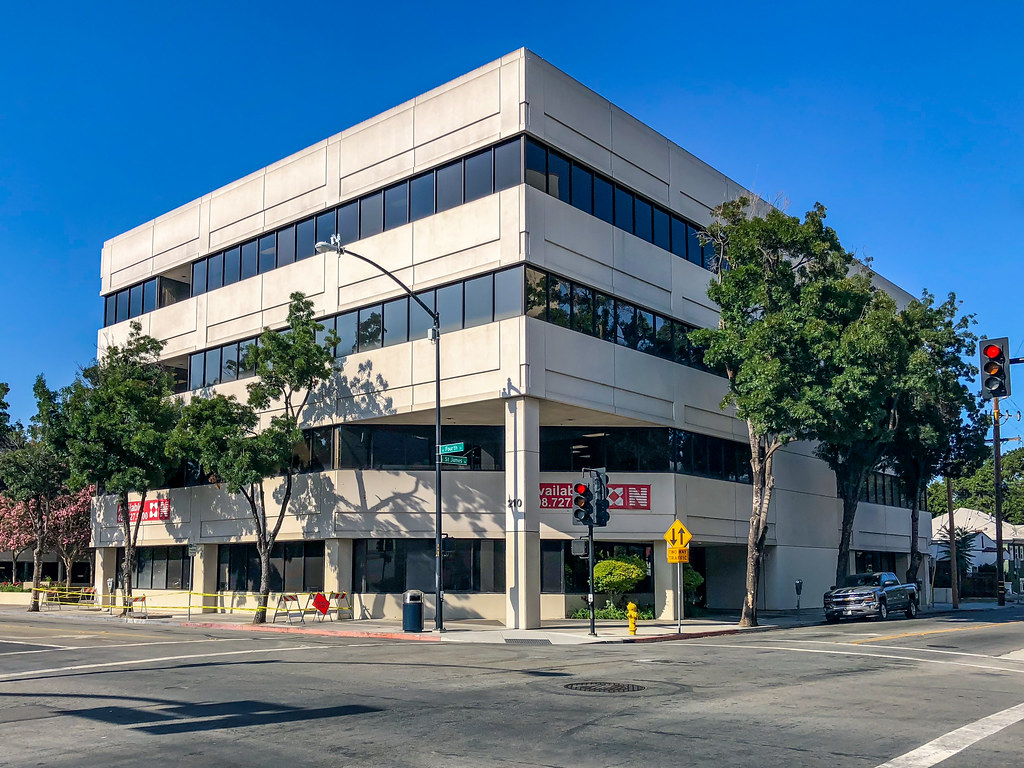
New office petitions entail additional evidentiary requirements due to the lack of U.S. operating history. Under 8 CFR 214.2(l), you generally need to show that you have secured sufficient physical premises for the new office.
Because the initial approval is limited to one year, plan the first year around building something real: hiring staff, generating revenue, and establishing operations. At extension time, USCIS wants evidence that the office moved beyond a startup phase and now genuinely requires a manager or executive. A new office that never actually launched is the classic extension problem.
Opening the U.S. Branch: Step by Step
The initial phase of the L-1A New Office Visa for Turkish Companies is pivotal, as it sets the ground for future business success in the U.S.
- Form the U.S. entity. Incorporate a subsidiary, branch, or affiliate with a clear ownership link to the Turkish company.
- Secure physical premises. Lease real office or commercial space appropriate to the business.
- Prepare a business plan. Show how the office will grow and support a managerial or executive role within a year.
- Document the relationship. Assemble ownership charts, corporate records, and financials for both entities.
- Establish the manager’s history. Prove one continuous year of qualifying employment abroad and the U.S. role’s duties.
- File Form I-129 with the L supplement, then complete consular processing in Turkey or a change of status if eligible.
Extending Beyond the First Year
To extend a new office L-1A beyond the initial year, you must demonstrate that the office is operating and still requires a manager or executive. Useful evidence includes payroll and staffing, financial statements, contracts and invoices, a lease, and an organizational chart showing the transferee genuinely managing or directing operations.
The theme is continuity. Everything you promised in the new office petition should show measurable progress by extension time. A one-person operation with little activity struggles to prove that a managerial or executive role exists.
Fees and Timeline
L-1 petitions filed on Form I-129 carry the base filing fee plus L-specific fees, and government fees change over time, so verify current amounts before filing. Common items include the I-129 base fee, the Fraud Prevention and Detection fee for L petitions, and, where it applies, the Asylum Program Fee. Premium processing is available to speed the USCIS decision on the petition. Consular interview wait times at the U.S. Mission in Turkey vary.
Understanding the cost implications when applying for the L-1A New Office Visa for Turkish Companies and planning accordingly is vital to avoid financial strain.
Many Turkish companies find that the L-1A New Office Visa for Turkish Companies provides an essential bridge to a successful international operation.With the L-1A New Office Visa for Turkish Companies, businesses can enhance their operational flexibility, adapting quickly to market demands.
| Item | Note (verify current amount) |
|---|---|
| Form I-129 base filing fee | Reduced for small employers with 25 or fewer employees |
| Fraud Prevention and Detection fee | Applies to L-1 petitions |
| Asylum Program Fee | May apply to employer-filed I-129; reduced or waived for small or nonprofit employers |
| Premium processing (optional) | Faster USCIS action on the petition |
Common Denial Reasons
-
- Weak managerial or executive evidence. Duties that look operational rather than managerial.
Proper understanding of the requirements tied to the L-1A New Office Visa for Turkish Companies can significantly improve the chances of a successful application.
-
- Unclear qualifying relationship. Ownership or control between the two companies not well documented.
- Thin new office plan. No credible path to supporting a manager within a year.
- No real premises. A virtual address instead of secured physical space.
- Insufficient foreign operations. Doubt about whether the foreign company will keep operating.
Many firms succeed in establishing a strong U.S. presence through the L-1A New Office Visa for Turkish Companies, leveraging their existing resources and expertise.
- Extension without progress. A new office that never actually launched.
A Note for Turkish Companies
Turkish companies expanding to the U.S. usually process the L-1A through the U.S. Mission in Turkey after USCIS approves the petition. Prepare Turkish corporate records, ownership documents, and financial statements with certified English translations, and make sure the ownership link between the Turkish parent and the U.S. entity is unmistakable. Consistency between your Turkish and U.S. documentation is what makes the qualifying relationship easy for an officer to confirm. If your longer-term goal is permanent residence, the L-1A can lead to an EB-1C green card for multinational managers.
Wann sollte man einen Anwalt für Einwanderungsrecht hinzuziehen?
Working with an attorney familiar with the L-1A New Office Visa for Turkish Companies can provide a strategic advantage in navigating the complexities of U.S. immigration law.
New office L-1A petitions are evidence-heavy, and the one-year clock makes the first year critical. Legal review helps most when you are structuring the U.S. entity, defining the manager’s role, or building the business plan that must justify a managerial position within a year. An attorney can help document the qualifying relationship, prepare for the extension from the start, and coordinate the transfer with a longer-term green card strategy. Outcomes depend on the specific facts of each company and transferee.
Häufig gestellte Fragen
What is an L-1A new office visa?
It is an L-1A intracompany transfer used when the U.S. company has been doing business for less than one year. It allows a qualifying foreign company, such as a Turkish business, to send a manager or executive to launch a related U.S. office. Because the office is new, USCIS approves the first petition for only one year and reviews progress before extending.
Die L-1A New Office Visa for Turkish Companies is a critical component of any international business strategy and should be considered early in the planning process.
How long does one year abroad have to be for the L-1A?
The transferee must have worked for the qualifying foreign company for at least one continuous year within the three years before the petition, in a managerial or executive capacity. The year must be continuous for the L-1 nonimmigrant visa. This is different from the EB-1C green card, where the one year of qualifying employment does not have to be continuous.
Why is the first L-1A new office approval only one year?
Because the U.S. entity has little or no operating history, USCIS limits the initial new office petition to one year under 8 CFR 214.2(l). The idea is to let the company launch, then confirm at extension time that the office actually started operating and genuinely needs a manager or executive. Extensions afterward are typically granted in two-year increments.
Understanding the implications of the L-1A New Office Visa for Turkish Companies is essential for long-term success in the U.S. market.
What corporate relationship qualifies for the L-1A?
The U.S. and foreign companies must share a qualifying relationship as parent, subsidiary, branch, or affiliate, based on common ownership and control. A contract or business partnership between unrelated firms does not qualify. For a Turkish company, this usually means forming a U.S. subsidiary owned by the Turkish parent, documented with incorporation records, share registries, and ownership charts.
Do I need physical office space for a new office L-1A?
Yes. New office petitions generally require evidence that you have secured sufficient physical premises for the operation. A virtual office or mailing address is usually not enough. You should lease real commercial or office space appropriate to the business, since a lack of genuine premises is a common reason new office petitions are questioned or denied.
Every Turkish company considering expansion to the U.S. should explore the benefits of the L-1A New Office Visa for Turkish Companies.
How long can I stay on an L-1A visa?
L-1A status can be extended in two-year increments up to a maximum of seven years. A new office petition starts with a one-year approval, and subsequent extensions require proof the office is operating. Many executives use their L-1A time to pursue an EB-1C green card, which shares similar managerial and executive requirements but does not require PERM labor certification.
Can the L-1A lead to a green card?
Yes. Managers and executives on an L-1A often transition to permanent residence through the EB-1C category, which is designed for multinational managers and executives and does not require PERM labor certification. The requirements overlap significantly with the L-1A, though there are important differences. Planning the green card strategy early helps align the two.
Planning for the long-term transition from the L-1A New Office Visa for Turkish Companies to a green card can help ensure a seamless business operation.
Fazit
The L-1A new office visa is built for ambition: it lets a Turkish company plant a flag in the U.S. and send its own leader to grow the business. The one-year initial approval is not a hurdle so much as a milestone. Build a real office in that first year, with staff, revenue, and genuine management, and the extension follows the story you have created. Cut corners, and the extension is where it shows. Every case turns on its own facts, and nothing here guarantees an outcome.
If you are ready to open a U.S. branch and transfer an executive, Atlas Legal Immigration Law can help you structure the entities, document the relationship, and prepare a petition built to survive the extension. Reach us at 1750 E Golf Rd, Büro 214, Schaumburg, IL 60173, anrufen (+1) 872 382 2762, oder per E-Mail info@theatlaslegal.com. Erfahren Sie mehr auf unserer L-1A visa page.
In summary, the L-1A New Office Visa for Turkish Companies represents a fantastic opportunity for growth and leadership within the competitive U.S. market.
Überprüft von der Redaktion von Atlas Legal Immigration Law. Zuletzt überprüft am 21. Juli 2026.
Quellen
-
- Elektronisches Bundesgesetzbuch, 8 CFR 214.2(l), L-1 Intracompany Transferees
- US-Einwanderungs- und Staatsbürgerschaftsbehörde, L-1A Intracompany Transferee Executive or Manager
Utilizing the L-1A New Office Visa for Turkish Companies wisely can lead to significant expansion opportunities for Turkish firms in the United States.
- US-Einwanderungs- und Staatsbürgerschaftsbehörde, Formular I-129, Antrag auf eine Arbeitsgenehmigung für Nicht-Einwanderer
Dieser Artikel dient ausschließlich allgemeinen Informationszwecken und stellt keine Rechtsberatung dar. Einwanderungsgesetze, behördliche Gebühren, Richtlinien und Bearbeitungszeiten können sich ändern. Das Lesen dieses Artikels oder die Kontaktaufnahme mit Atlas Legal begründet für sich genommen noch kein Mandatsverhältnis. Der Ausgang einer Einwanderungsangelegenheit hängt von den jeweiligen individuellen Fakten und Umständen ab.
Verwandte Artikel
Ultimately, the L-1A New Office Visa for Turkish Companies serves as a gateway to broader market engagement and operational success.



1 Kommentar
Kommentare sind geschlossen.